A First Investment Property in Charleston and a Purchase Contract That Had Already Survived Two Failed Lenders
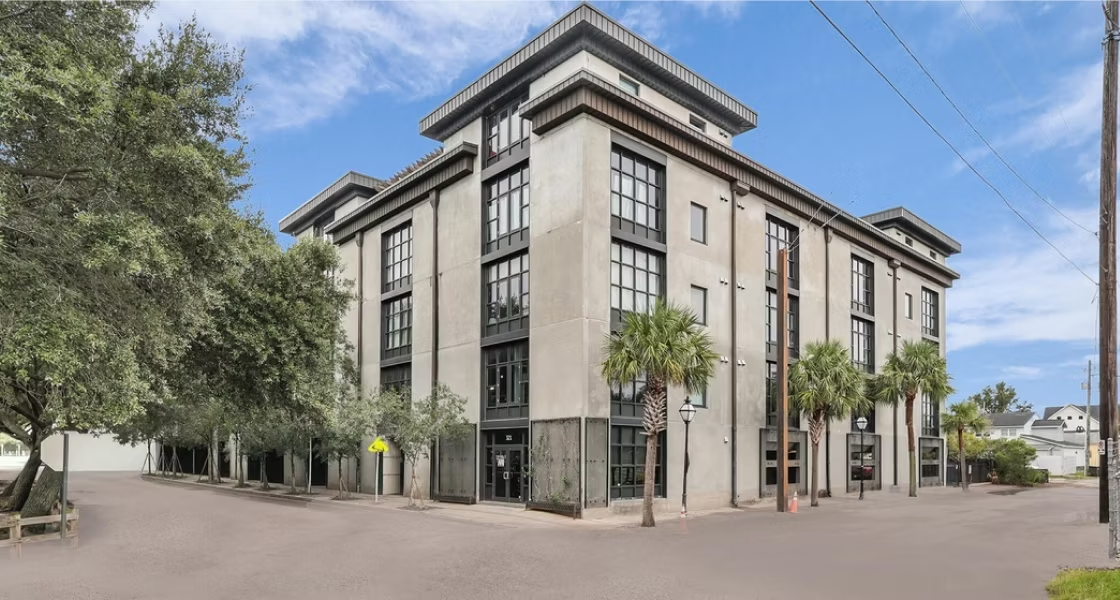
The borrower had identified her first investment property, a condo in Charleston, South Carolina, and was ready to move. The plan was straightforward: secure a purchase loan, close on the property, and start building a portfolio. The asset was priced well, the numbers worked, and the borrower was qualified.
The problem wasn't the borrower. It was the property. The condo carried a non-warrantable designation, and part of the building's condo association was still under construction. That combination had already stopped two lenders. By the time the file arrived at Brick City Capital, the borrower was running out of runway on her purchase contract. A third failure would mean losing the property entirely.
Timing was the entire game at this point. What mattered most was finding a lender who understood non-warrantable condo underwriting well enough to move with confidence and fast enough to make the contract deadline.
Non-Warrantable Status Plus an Incomplete Construction Site in the Same Building
Non-warrantable condos are ineligible for conventional financing through Fannie Mae and Freddie Mac. The reasons vary: investor concentration, pending litigation, delinquent HOA dues, short-term rental usage, but the result is the same: conventional and most agency lenders can't touch the file. For a first-time investment property buyer, that narrows the field immediately.
The second layer made it harder. Part of the condo association was still under active construction. Incomplete construction within a condo building raises questions about the project's stability, the HOA's financial position, and the lender's exposure if the development stalls. Even within the non-QM lending market, many lenders treat incomplete construction as a hard stop. Too much uncertainty, not enough to underwrite against.
Two lenders had already reached exactly that conclusion. The file wasn't unfamiliar territory; it had already been reviewed and declined. The borrower arrived at Brick City Capital with a ticking clock and a deal that the prior lenders had collectively concluded was too complicated to close.
Could not qualify the non-warrantable designation. Conventional and agency programs are ineligible by definition. Most non-QM lenders also declined given the additional construction complexity.
Active construction within the condo association added risk that neither lender was willing to underwrite. The combination of non-warrantable status and incomplete construction produced a second decline.
Two lenders had already failed on this file. The purchase contract was approaching expiration with no close in sight.
Prior Lender Outcome
2x
Deal Declined
Non-warrantable condo underwriting is a core competency. The designation alone was not an obstacle; understanding how to evaluate the specific project was what mattered.
Reviewed the specific construction status at intake and determined the loan could be cleared without requiring full construction completion. The project met the threshold needed to move forward.
Appraisal ordered the same day the term sheet was signed. Appraiser on site two days later. Closed in 16 days before the contract deadline.
Brick City Capital Result
16 Days
Purchase Closed
Have a non-warrantable condo file that conventional lenders turned away?
Non-warrantable designation, HOA complications, incomplete construction. If the borrower is qualified and the asset is sound, there is often a path. Submit the file and find out.
Know the Product. Move the Moment the File is Signed.
The critical decision on this deal was made at intake: understanding the non-warrantable designation clearly enough to evaluate whether the specific construction status was a barrier or just a variable to manage. Many lenders treat incomplete construction as automatic disqualification. The right question isn't whether there is construction, it's whether the status of that construction is compatible with the loan being underwritten.
Once the file was assessed and the path was clear, execution was immediate. There was no period of uncertainty, no extended back-and-forth while the deal aged. The term sheet was signed, the appraisal was ordered the same day, and the appraiser was on site within 48 hours. Everything moved on a single track from intake to close.
DAY 1
Term Sheet Signed, Appraisal Ordered Same Day
Non-warrantable condo status and construction details reviewed at intake. Loan determined to be clearable without requiring full construction completion. Appraisal ordered the same day the term sheet was executed no waiting period.
DAY 3
Appraiser On Site
Appraiser accessed the property two days after the term sheet was signed. Fast appraisal turnaround is critical on a compressed purchase timeline. The appraisal is often the longest lead-time item, and getting it scheduled immediately compressed the overall clock.
DAYS 14–15
Underwriting Cleared, Non-Warrantable Status Confirmed
Non-warrantable condo review completed. Construction status within the building assessed and cleared. Borrower documentation processed. Appraisal returned and reviewed. Underwriting moved through without a restructure or program change.
DAY 16
Purchase Closed at 6.5%, 30-Year Fixed
✓ $223,825 purchase loan funded — 70% LTV, 30-year fixed, fully amortized
✓ 6.5% rate secured for the borrower
✓ Non-warrantable condo cleared with active construction in the building
✓ Purchase contract honored — borrower did not lose the property
✓ First investment property acquired, portfolio building begins
Non-warrantable doesn't mean un-financeable. It means the lender needs to actually understand the product.
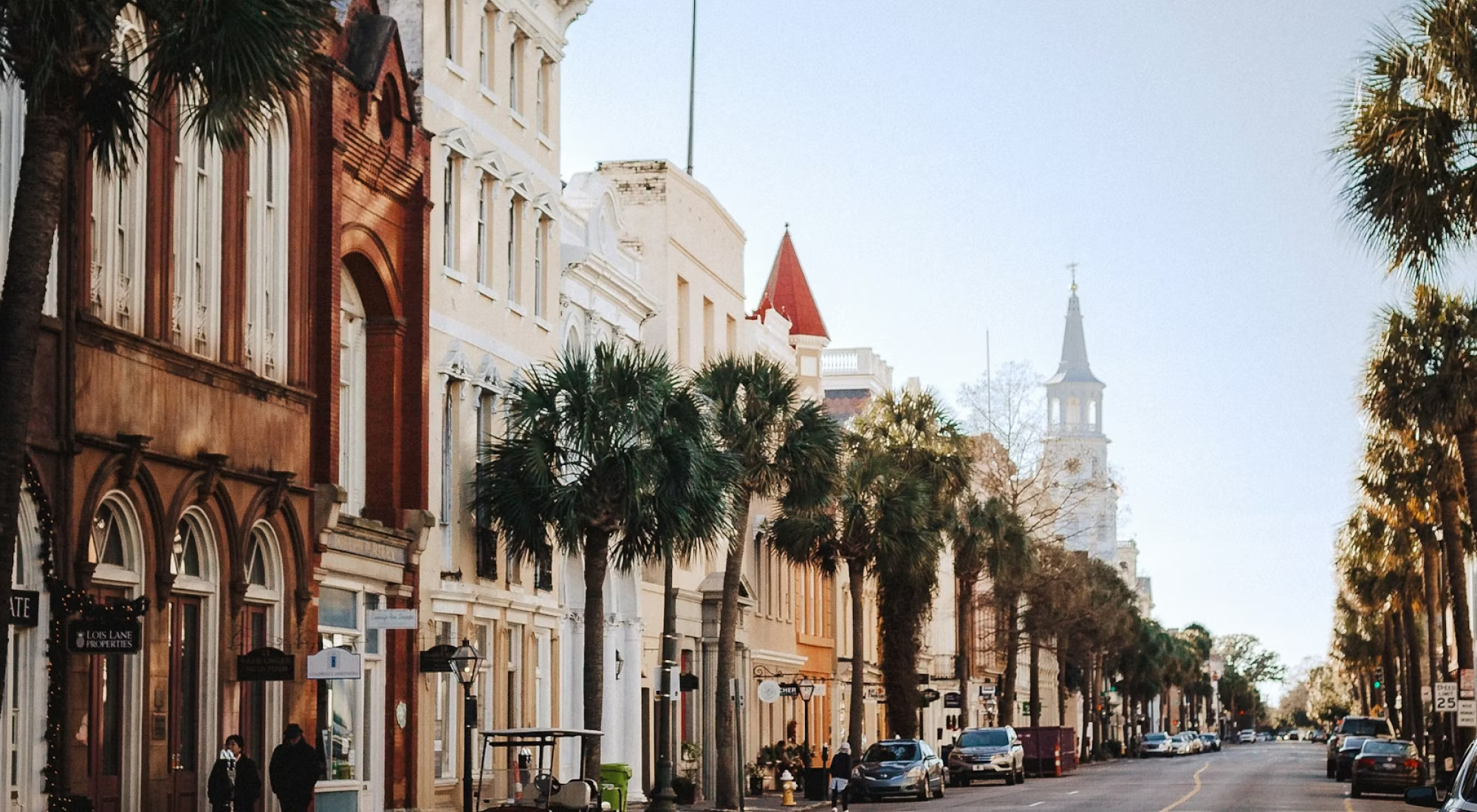
Non-warrantable condos represent a significant share of investment-grade condo inventory, particularly in markets like Charleston, where new construction, boutique developments, and properties with high investor concentration are common. The designation closes the door to conventional financing, but it doesn't eliminate the deal. It eliminates lenders who only know how to work one program.
The added complexity of active construction within a building compounds the problem, but it's not categorically insurmountable. The question is whether the specific construction status creates genuine risk to the loan or whether it's a variable that can be assessed and managed. That distinction requires knowing the product well enough to make the call, not defaulting to a decline because the checklist has an unchecked box.
For this borrower, the difference between a lender who knew the product and two who didn't was the difference between starting a portfolio and losing her first deal. The loan closed in 16 days. The property is hers.
16 Days
From intake to funded on a file two lenders had already declined.

"This deal came down to really understanding the market, understanding how to underwrite a non-warrantable condo, and being able to expedite the documents in order to ensure a quick closing."
WHO SHOULD BRING US DEALS LIKE THIS
If the condo is non-warrantable and the conventional lenders have already said no, that's the starting point, not the end.
Buyers and investors purchasing non-warrantable condos in active markets
Charleston, coastal markets, urban cores, and new construction corridors frequently produce non-warrantable condo inventory. If the borrower is qualified and the property is sound, the designation alone is not a reason to walk away. It's a reason to find the right lender.
Brokers whose non-warrantable files have already been turned away elsewhere
Conventional lenders declined because the file doesn't fit their program, not because the deal is broken. Non-warrantable condo underwriting is a specialty, and lenders who have done it before know which variables actually matter and which ones don't. Submit the file and find out where it stands.
First-time investment property buyers who need both speed and certainty
The combination of a tight purchase contract and a non-standard property type is exactly where execution matters most. A lender who moves slowly on a non-warrantable file costs the borrower the deal. If the borrower needs to close quickly and the property has been turned away before, bring it to a team that knows the product.
Investors in developments with construction still underway
Incomplete construction within a condo building is a common reason lenders decline. Whether that construction status is actually a barrier depends on the specifics. If another lender said no because of ongoing construction, it's worth a second review before assuming the deal is dead.