A Rate-and-Term Refi on a Property He Decided to Keep
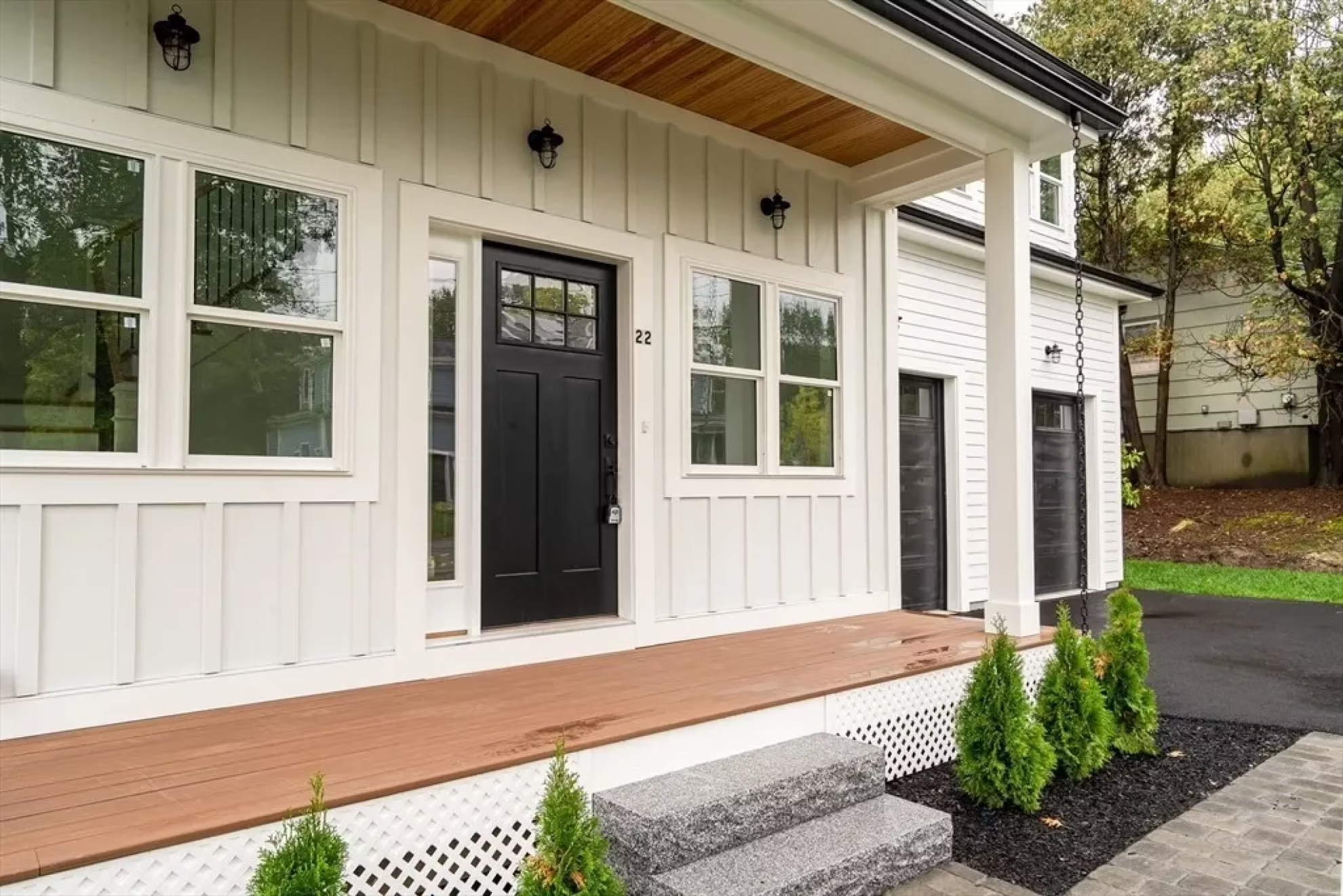
The borrower owned a single-family home in Sunrise Beach, Missouri. The original plan had been to sell. When that changed, the goal became simple on the surface: secure a 30-year fixed rate-and-term refinance, hold the property, and free up capital in the process.
Underneath that goal was a deadline. A construction loan was approaching maturity. The borrower needed the refinance proceeds to cover that payoff and he needed it done before the clock ran out. He was looking for full 75% LTV, a better rate than he was carrying, and enough flexibility to leave his options open if anything changed later.
On paper, the deal looked straightforward. In a standard market, it might have been. Sunrise Beach is not a standard market and that made everything that followed dependent on one thing: whether the lender in front of him understood it well enough to close it.
A Seasonal Market That Doesn't Comp and a DSCR That Doesn't Work
Sunrise Beach is a lake community. Activity concentrates in four, maybe five months out of the year. Occupancy drops off sharply outside of that window. Market rents are low. Short-term rental numbers look weak not because the property is underperforming, but because the market itself runs at a structural occupancy deficit for most of the calendar year.
That creates two problems simultaneously. First, the submarket is thin; comps are scarce, gross appraisal adjustments run high, and anyone underwriting to a standard residential DSCR framework will encounter the same wall at the same place. Second, the DSCR simply didn't pencil. The property income relative to the proposed debt service didn't cross 1.0. Standard DSCR programs were out before the appraisal was even ordered.
Most lenders stop here. Not because the borrower isn't creditworthy — he is. Not because the property isn't real collateral — it is. They stop because the program they use requires a number the market won't produce. The question wasn't whether DSCR worked. It didn't. The question was whether there was a path that did.
Program Flexibility
DSCR-only underwriting. No alternative qualification path for thin seasonal markets.
Submarket Navigation
No framework for thin comps, high gross adjustments, or seasonal occupancy discounts.
Prepayment Structure
Full 5-year prepayment penalty - borrower locked in with no flexibility to adjust later.
DSCR Coverage
< 1.0
Deal Declined
Program Flexibility
Pivoted to bank statement qualification at intake - without relying on market rent.
Submarket Navigation
Appraisal reviewed with full understanding of Ozarks seasonal dynamics adjustments.
Prepayment Structure
Negotiated to a fixed 1% exit fee: lender certainty maintained, borrower optionality preserved.
Resulting Income Model
75% LTV
Deal Approved
Have a deal a lender already turned down?
If you're working with a seasonal rental, a hard-to-comp submarket, or a borrower who doesn't fit the standard DSCR box. Bring it to us before you walk away from it.
Identified at intake that DSCR was never the path forward on this file. The market makes that impossible. Rather than running the borrower through a program that wouldn't qualify him, the deal was repositioned immediately to a bank statement loan, a program that qualifies on documented borrower income rather than property cash flow.
That pivot was the deal. Bank statement qualification gave the borrower the full 75% LTV he needed and covered the existing loan payoff in its entirety, freeing up the capital required to close out his construction loan. No cash out required. No secondary transaction. One refinance, fully structured, covered everything.
The prepayment penalty was also renegotiated. An initial structure with a 5-year prepaid was replaced by a fixed 1% exit fee, maintaining appropriate risk coverage for the lender while giving the borrower room to make changes if his plans evolved. That's not a small concession. For a borrower who might be reconsidering his hold strategy, that flexibility matters.
DAY 1
Intake & Program Pivot Identified
Deal reviewed at intake. DSCR confirmed non-viable for the seasonal rental submarket. Bank statement program selected. Appraisal ordered with Ozarks comps methodology in mind.
DAYS 2–10
Appraisal & Bank Statement Underwriting
Appraisal received and reviewed with attention to gross adjustment levels specific to the thin Sunrise Beach submarket. Bank statement income documentation submitted and processed in parallel.
DAY 20
Underwriting, Payoff Coordination & Prepay Structure
Full underwriting completed. Existing loan payoff amount confirmed and covered within deal structure. Prepayment penalty renegotiated from 5-year to fixed 1% exit fee.
DAY 26
Rate and Term Refi Closed
✓ $581,250 funded at 75% LTV, 30-year fixed
✓ Existing loan payoff covered in full
✓ Borrower capital freed to cover construction loan
✓ Property retained, maturity default avoided
Seasonal markets don't fail DSCR. DSCR fails seasonal markets.
The Lake of the Ozarks is not a failing asset class. It's a market that operates on a different calendar than DSCR underwriting was built to accommodate. Four to five months of peak occupancy with low year-round market rents will produce a sub-1.0 DSCR on almost any property, regardless of borrower quality, equity position, or long-term performance.
Lenders who treat that outcome as a deal-killer are not being conservative. They're being inflexible. The borrower here had real equity, documented income, a legitimate use of proceeds, and a property worth holding. What he didn't have was a DSCR ratio that worked. In most lending environments, that would have been the end of the conversation.
The program flexibility to pivot to bank statement, combined with the submarket knowledge to navigate the appraisal correctly, is what separated this outcome from a declined file. That combination is not common. That's the point.
$581,250
Funded in 26 days on a deal every DSCR program would have declined.

"This deal came down to really the certainty of execution and being able to understand the submarket completely and meet all the requests of the borrower."
Who Should Bring Us Deals Like This
If your borrower doesn't fit the standard box, that's not disqualifying. That's a starting point.
Seasonal rental investors
Lake houses, ski properties, coastal vacation rentals; markets where occupancy is concentrated and DSCR is structurally compromised. Bank statement programs exist for exactly this reason. If you've been declining these before intake, you're leaving good deals on the table.
Borrowers approaching maturity on bridge or construction loans
Maturity timelines create urgency that most lenders can't accommodate. If the borrower has equity and income, the structure can be built, but it requires a lender who can close 26 days from intake without stumbling at the appraisal.
Investors who've been told the numbers "don't pencil"
Sub-1.0 DSCR in a thin submarket is not the same as a bad borrower with a bad property. If the equity is real and the income is documented, there is often a path just not through the program the last lender was using.
Anyone who wants prepayment flexibility without losing leverage
Full 5-year prepaid is not the only structure available. If borrower flexibility matters; and it should, especially on a property where the hold strategy might evolve - bring it to us before agreeing to terms that lock in one outcome permanently.