our markets
DSCR Loans in New Jersey for Investors and Brokers
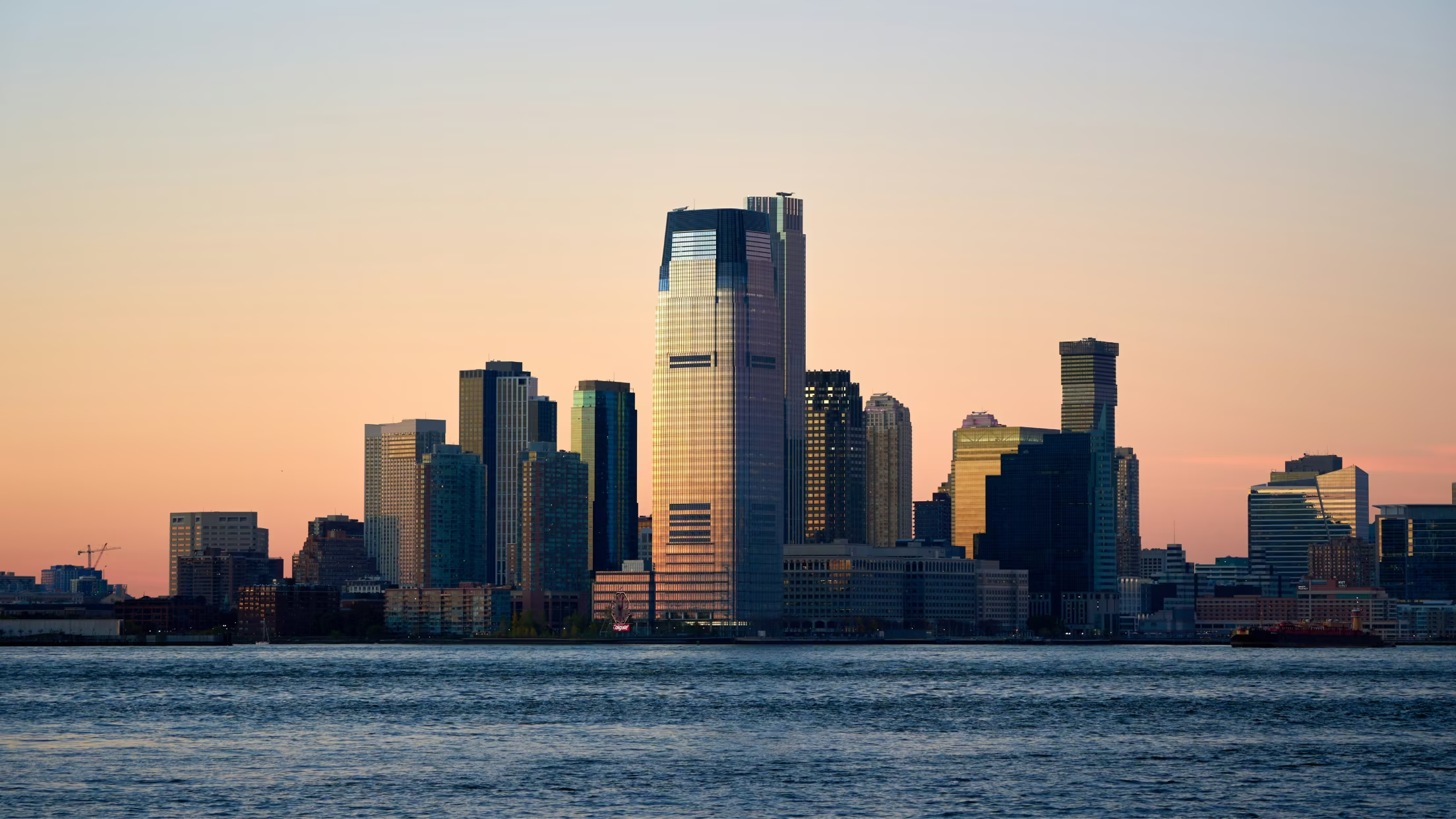
New Jersey is one of the most structurally demanding investor markets in the country. As a judicial foreclosure state carrying some of the highest property taxes in the nation, DSCR loans here demand disciplined structuring before any rate conversation.
Brick City Capital provides DSCR financing across New Jersey for brokers and investor clients navigating tax compression, condo concentration, and stabilization timelines. As a DSCR lender built for complex files, we underwrite to how the asset actually performs here.
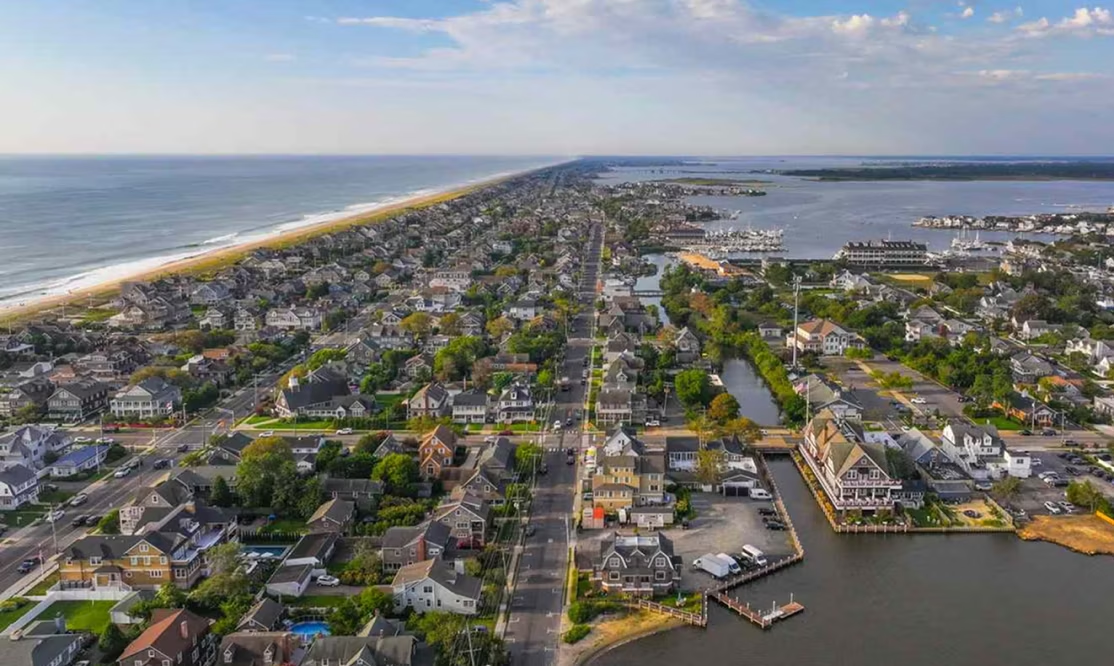
Across Jersey City, Hoboken, Newark, Paterson, and Bergen County, investor activity remains strong. Rental demand supports steady transaction volume, particularly in condo-heavy urban corridors and 2-4 family neighborhoods. But New Jersey introduces structural realities that materially impact underwriting:
Among the highest property taxes in the nation, where the full tax load lands directly on the DSCR ratio.
A court-driven judicial foreclosure process that lengthens recovery timelines and shapes risk modeling.
Condo-heavy urban markets where non-warrantable classifications routinely block conventional financing.
Appraisal variability across smaller suburban and mixed-use submarkets with limited comparable sales.
High investor concentration in urban corridors and individual buildings that exceed conventional limits.
Sponsor-controlled or partially sold-out projects carrying no stabilized rental operating history.
In this environment, qualification is rarely about income alone. It’s about how the deal is structured around tax exposure, concentration limits, and timeline risk.
Each structural reality above has a specific underwriting answer on a New Jersey file.
When a hard file closes the way you told your client it would, your credibility comes out intact.


Our headquarters
50 Park Place, Suite 301
Newark, NJ 07102
loan products